
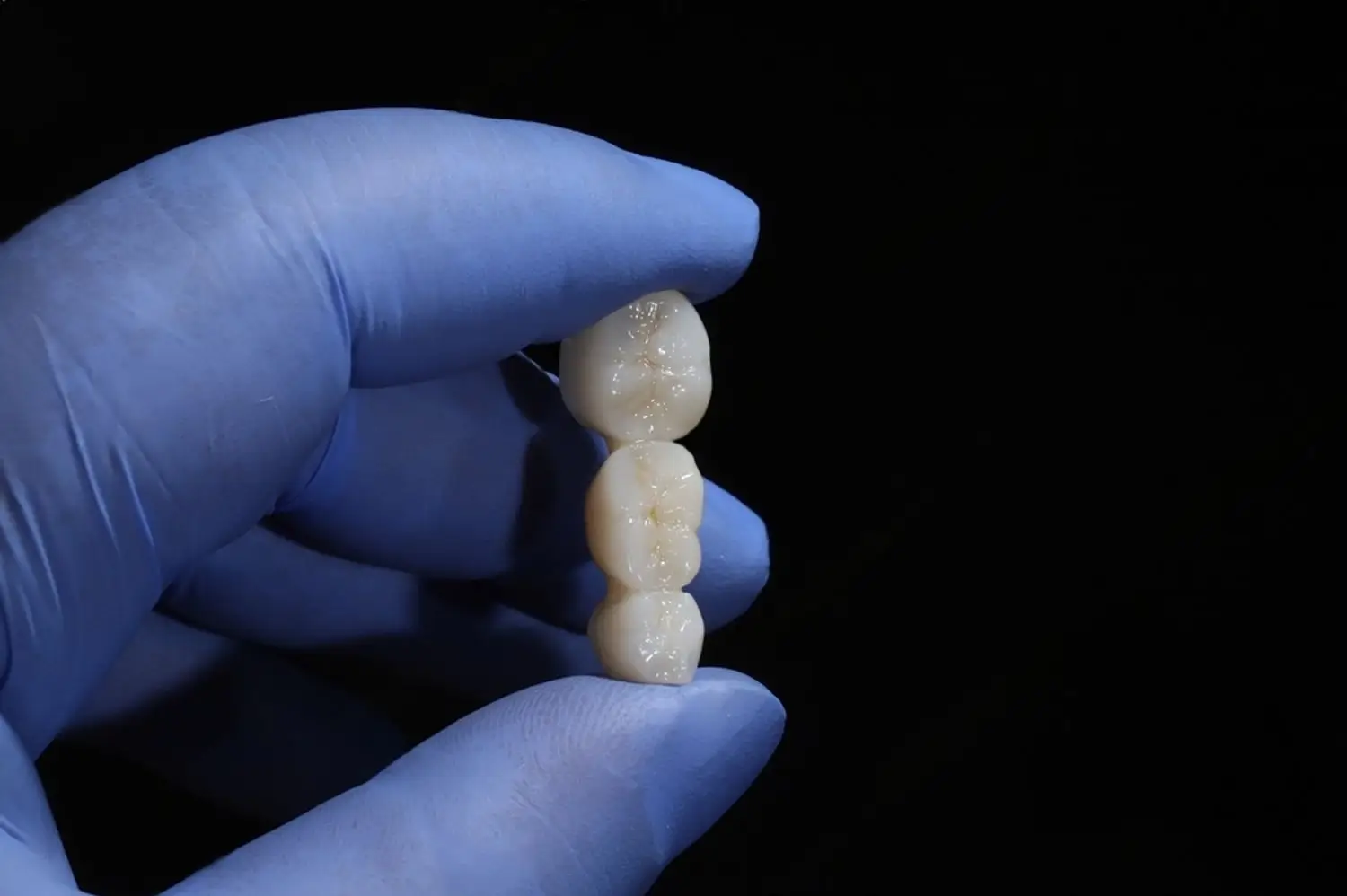

A fixed dental bridge represents a prosthetic solution intended to restore both the functionality and aesthetics of the denture. As its name suggests, these bridges are fixed to two supports, which can be natural teeth or implants, and are distinguished by having pontic prostheses in the central part.
You may need a fixed dental bridge
in situations where there are multiple missing teeth and you want to restore functionality. In our practice, we often recommend fixed dental bridges on implants for patients facing this situation. By placing implants, certain care can be followed to prevent bone resorption, as the bone finds support. Additionally, this helps to restore the bite, allowing patients to eat properly and achieve a balance in occlusal forces, which contributes to maintaining oral functions in the long term. In case of a missing tooth, we suggest opting for an implant instead of a bridge that depends on healthy teeth, as the trimming of the latter weakens them, which goes against the philosophy of minimal invasion and dental conservation. If there are two adjacent missing teeth, we also recommend placing implants instead of a bridge that is too extensive, to avoid compromising the stability of healthy teeth in the future. It is essential to trust a Dentist in Palma who properly evaluates the available options and determines the best solution for each case.
Advantages of fixed dental bridges
Among the advantages offered by fixed dental bridges is the fact that they allow the patient to improve their aesthetics and facial harmony. Missing teeth can cause alterations in the bite and shorten the distance between the nose and chin, resulting in unpleasant facial asymmetries. Additionally, they are usually more economical than dental implants, making them a popular option for cases with multiple missing teeth. These bridges are also durable and can be properly maintained over time, as long as there are not more than two pieces between the supports, regular care is performed, and a comprehensive occlusion study is carried out. Although not as stable as implants, they constitute a more reliable fixed solution than removable prostheses.
Types of dental bridges
There are different types of dental bridges, each with its own characteristics.
1. Traditional dental bridge:
This type of bridge is composed of one or more prostheses that are secured to the adjacent teeth to the missing piece through dental crowns. It is the most common model and can be used when there are healthy natural teeth on both sides of the space left by the missing tooth. As mentioned earlier, for these cases, placing a dental implant between healthy teeth is the most recommended option.
2. Cantilever dental bridge:
Cantilever bridges have similarities to traditional bridges, but the block of prostheses is supported through a dental crown on a single tooth. This option is not recommended.
3. Maryland dental bridge:
In this case, Maryland bridges use a metal or porcelain structure that adheres to the back of the two teeth near the missing piece, without the need to trim them. They are often used as temporary prostheses to improve aesthetics while waiting for the placement of the definitive prosthesis on an implant, once the osseointegration period between the implant and the bone tissue is completed.
4. Fixed bridge on implants:
This option is ideal when multiple teeth are missing. Instead of relying on healthy teeth, they are fixed directly to dental implants. A specialist in dental rehabilitation and prosthesis will determine the proper location for the implants and ensure proper occlusion between both arches, with the goal of restoring both function and aesthetics to the patient.