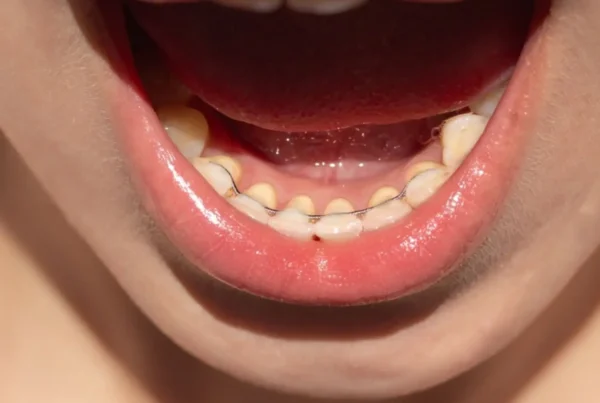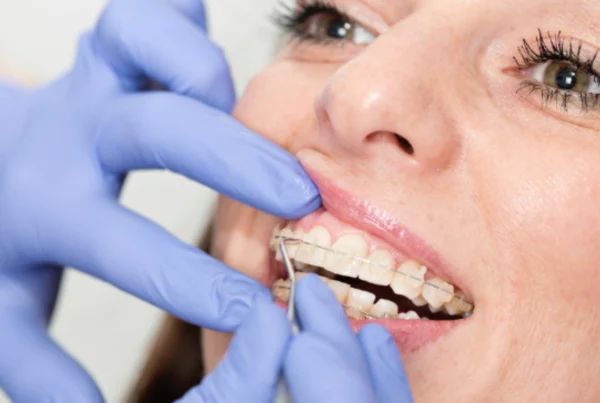



Many people who begin a treatment of orthodontics in Palma de Mallorca wonder whether they will notice changes in their face. Although orthodontics is mainly focused on correcting tooth position and bite alignment, it can also naturally influence facial harmony and profile balance.
A proper diagnosis carried out by a dentist in Palma de Mallorca helps determine what type of changes may occur and which treatment is most suitable for each case.
How can orthodontics influence the shape of the face?
Orthodontics works directly on tooth positioning and the relationship between both dental arches. These movements can slightly modify certain soft tissues of the face, especially around the lips, chin, and facial profile.
In most patients, the changes are gradual and natural. The goal is not to completely transform the face, but to achieve better harmony between the smile, the bite, and facial proportions.
When the front teeth are significantly protruded and are repositioned correctly, the lips often appear more balanced and the profile may look more proportionate. This also commonly occurs in patients with severe crowding or major bite problems.
The most common changes that may be noticed
Facial changes resulting from orthodontic treatment usually affect the lower third of the face. Depending on the case, some patients notice better profile alignment, improved facial symmetry, or a more balanced lip position.
A better visual relationship between the nose, mouth, and chin may also become noticeable once the bite is properly corrected. These changes are usually more visible when significant dental positioning issues existed before treatment.
In which cases are facial changes usually more noticeable?

The intensity of the changes depends on the type of malocclusion, the patient’s age, and the initial facial structure. Not all treatments produce visible modifications, but there are situations in which aesthetic effects tend to be more noticeable.
During adolescence and facial growth
In younger patients, especially during adolescence, orthodontics can influence facial development because the bones are still growing. This allows the bite to be guided more effectively and promotes a more balanced development of the jaw and upper maxilla.
When significant bite problems exist
Overbites, underbites, and crossbites often cause visible alterations in the facial profile. By correcting these issues through a treatment of orthodontics in Palma de Mallorca, facial aesthetics may improve significantly.
When the teeth protrude excessively
If the front teeth protrude too much, aligning them properly often creates a more harmonious and less projected profile. In many cases, visual tension around the lips is also reduced.
Can orthodontics define the jawline?
It is one of the most common questions among patients. Orthodontics can visually improve the jawline, although usually in a moderate way and always related to better bite balance.
By correcting tooth position and improving the fit between the upper and lower jaws, the lower third of the face often appears more proportionate. This can create the impression of a cleaner or more structured jawline.
However, orthodontics does not reshape the jaw in the same way that skeletal procedures or body composition changes can. Its effect is mainly functional and harmonious.
What changes orthodontics usually does not produce
There is a lot of exaggerated information on social media about extreme facial changes after orthodontic treatment. In most cases, those transformations do not reflect typical clinical reality.
Orthodontics does not usually radically change facial features or drastically modify bone structure. It also does not turn a soft jawline into a highly prominent one when the main issue is skeletal.
The real goal of treatment is to achieve a stable, functional, and aesthetic bite that supports oral health and facial harmony.
Differences between orthodontics and orthognathic surgery
Orthodontics corrects tooth position
Orthodontics is used to treat crowding, tilted teeth, mild or moderate bite problems, and alignment issues. Although it can improve the facial profile, its effects have limits when the origin of the problem lies in the bones.
Orthognathic surgery acts on the jaw bones
Orthognathic surgery is used when there is a significant discrepancy between the upper jaw and the lower jaw. This treatment can move bone structures forward or backward, correct facial asymmetries, and create more noticeable changes in the facial profile.
For this reason, when the problem is clearly skeletal, surgery produces much more visible changes than orthodontics alone.
How can you tell if the problem is dental or skeletal?
To determine the origin of the problem, a complete study is necessary. The orthodontist evaluates the bite, facial profile, symmetry, and the relationship between the upper and lower jaws.
Lateral skull X-rays allow specialists to study the position of bone structures, while panoramic X-rays help assess teeth, roots, and bone. In some complex cases, a 3D scan may also be used to obtain a more accurate view.
When a skeletal problem exists
A skeletal component is usually suspected when there is a significant disproportion between the jaws, marked facial asymmetry, or severe bite problems that do not fit together correctly.
In these situations, combining orthodontics with orthognathic surgery may be necessary to achieve an appropriate functional and aesthetic result.
When the problem is exclusively dental
If the bone structure is correct and the issue is limited to poorly positioned or crowded teeth, treatment can usually be resolved through orthodontics alone.
The importance of a personalized diagnosis
Every patient has a different facial structure and bite. For this reason, there is no universal answer regarding how much the face may change with orthodontic treatment.
A personalized study helps determine whether the problem is dental, skeletal, or mixed, while also establishing realistic expectations about the possible changes during treatment.
The combination of clinical examination, X-rays, and cephalometric analysis helps plan treatments that improve not only smile aesthetics, but also chewing function and facial harmony.