

You bite into a nut and feel a sharp, split-second jolt. You let go, and the pain vanishes as quickly as it came. You chew on that side again and it happens once more. But when you look in the mirror there’s nothing to see: no obvious cavity, no swollen gum, no broken piece. So what’s going on?
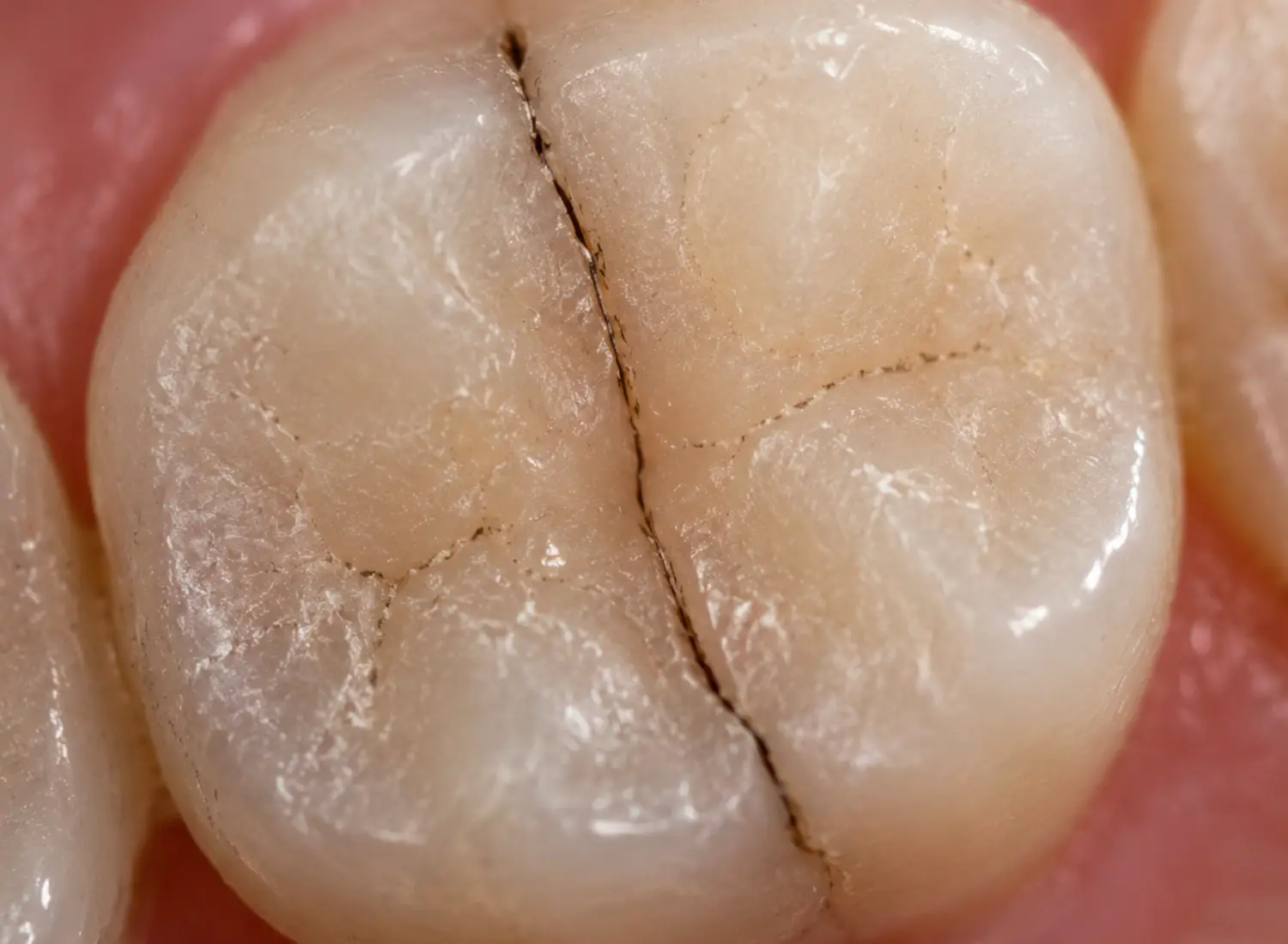
There’s a good chance you’re dealing with cracked tooth syndrome. It’s one of the most frustrating conditions for patients and dentists alike, because the problem is there but barely visible. At our practice we see it more often than people imagine, and it usually arrives late: because the pain comes and goes, many patients wait months before booking an appointment with a dentist in Palma de Mallorca. That very pattern of coming and going is the most valuable clue there is.
What cracked tooth syndrome actually is
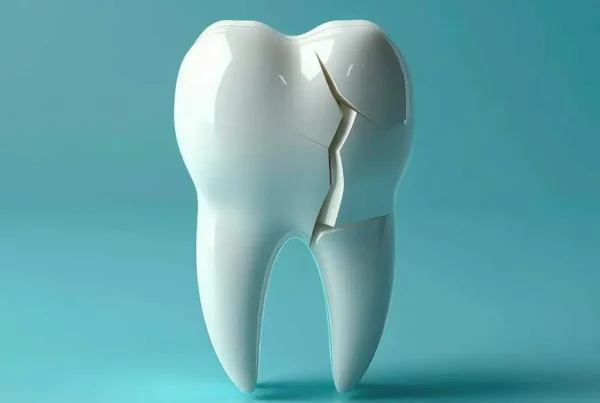
We’re talking about an incomplete fracture in a tooth, usually a molar or a premolar. The crack doesn’t split the tooth in two, but it does allow its fragments to move microscopically every time you chew.
That’s what sets it apart from a fully fractured tooth: here the break is partial, which is why the pain is so elusive and hard to pin down. The mechanism is easy to picture. When you bite, the cusps of the tooth separate by a fraction of a millimetre. That tiny movement irritates the dental pulp and triggers the jolt. The moment you stop pressing, the tooth settles back into place and the discomfort disappears as if nothing had happened.
Why teeth crack
There’s rarely a single cause. These are the ones we see most often:
- Bruxism. Clenching or grinding your teeth, usually at night and closely linked to stress, subjects the tooth to repeated micro-trauma that gradually undermines its structure. By some margin, this is the most common factor. If you think it might apply to you, here’s how we approach bruxism.
- Old, oversized fillings. When a restoration takes up a large part of the tooth, the healthy tissue left around it is thinner and far more prone to fissuring.
- Biting hard things. Ice, olive stones, boiled sweets, nuts still in their shell — or simply using your teeth as a tool.
- Sudden temperature swings. Going straight from something very cold to something very hot creates internal stresses that an already weakened tooth may not withstand.
- Age. Over the years enamel loses elasticity and teeth become more brittle.

Warning signs worth taking seriously
The most characteristic symptom is a sharp pain on biting that disappears the instant you release. It usually comes with brief, pinpoint sensitivity to cold rather than the constant sensitivity seen in other dental problems.
There’s another telling detail: most patients can’t confidently point to which tooth hurts. They know the area, but not the exact tooth. And the pain shows up mainly with solid foods rather than liquids. If this sounds familiar, it’s worth having it looked at.
Why it’s so hard to diagnose
A very fine crack may not show up on a conventional X-ray, simply because it doesn’t create enough contrast. On top of that, the pain is intermittent: it’s entirely possible that on the day of your appointment you feel nothing at all and everything looks normal.
That’s why the diagnosis relies on specific tests. We use selective bite instruments that load one cusp at a time until the pain is reproduced, pinpointing exactly which spot triggers it. It’s detective work, but it finds the culprit.
What happens if you leave it
A crack doesn’t heal on its own. Over time it tends to deepen, and once it reaches the pulp the picture changes completely: the pain stops being intermittent and becomes constant, often with intense episodes at night. At that stage, protecting the tooth is no longer enough.
The end scenario is a complete fracture of the tooth, which in many cases means it has to be extracted. If the pain goes from occasional to constant, or comes on suddenly, don’t wait for your next check-up: see an emergency dentist in Palma as soon as you can, because the window to save the tooth narrows fast.
How it’s treated
Treatment depends on how far the crack has progressed:
- Dental crown. The go-to solution when the pulp is still healthy. The crown wraps around the tooth and stops the cusps separating as you chew, so the movement — and the pain — disappear.
- Root canal treatment. Needed when the inflammation of the pulp is irreversible. The tooth is then protected with a crown.
- Night guard. Essential if bruxism is the underlying cause. Without one we treat the consequence but not the cause, and the problem may simply reappear in another tooth.
- Replacing old restorations. In early-stage cracks, replacing a large, weakened filling can halt the progression.
It can be prevented
Getting bruxism under control is the single most effective measure, especially during high-stress periods. Beyond that, two simple habits: don’t use your teeth as a tool or bite hard objects, and keep up regular check-ups, which let us spot weakened fillings before a crack ever forms.
Frequently asked questions
Does a cracked tooth always hurt?
No. It can go months without any symptoms and then flare up out of nowhere.
Can it heal by itself?
No. A tooth doesn’t regenerate its structure, so a crack never closes on its own.
Is it the same as an enamel craze line?
No. Superficial craze lines are very common and rarely cause trouble. Cracked tooth syndrome involves internal functional damage, with movement between fragments.
Does treating it early really make a difference?
Yes, and this is the key point: the sooner the tooth is protected, the better the odds of keeping it without needing root canal treatment.
If this sounds like you, book an appointment
Stress, bruxism and the long lifespan of old restorations are making this problem increasingly common among adults. The good news is that, caught in time, the tooth can usually be saved without major complications.
At Centro de Urgencias Dentales we’re dentists in Palma de Mallorca with emergency cover, so if that jolt when chewing sounds familiar, we can assess it and tell you exactly what’s going on. Don’t wait for the tooth to break to find out.