
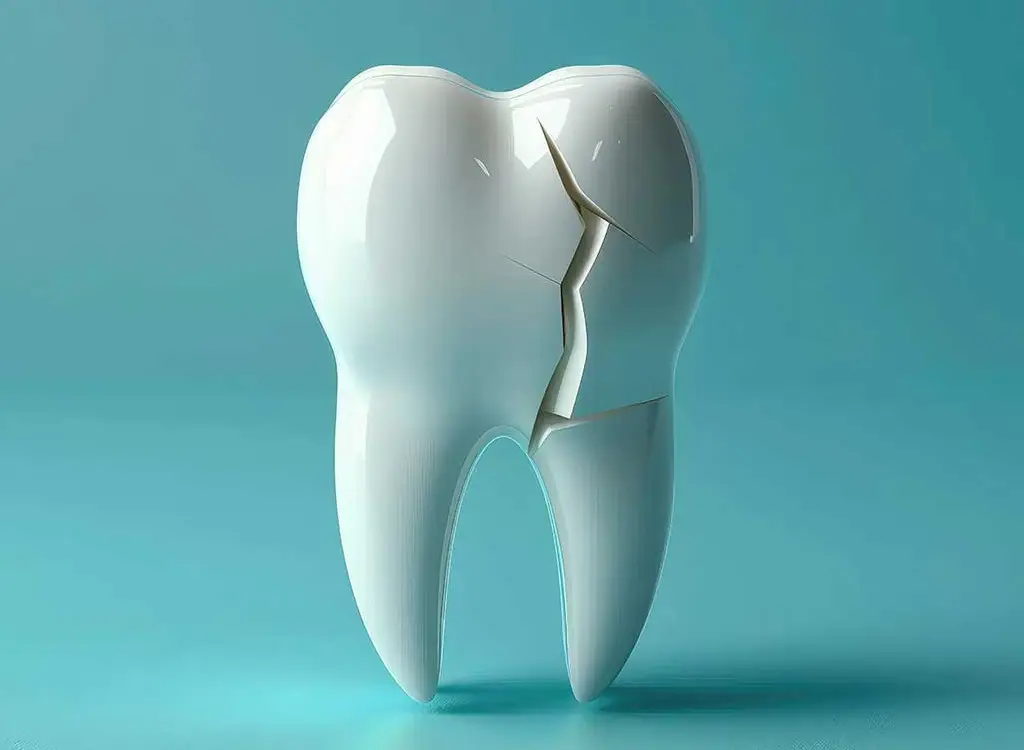

Having a piece of a molar break off can be quite alarming, especially if it happens while you are eating and you suddenly notice something hard in your mouth. However, in many cases the surprise is even greater when, despite having lost part of the tooth, there is no pain at all.
The fact that a broken molar does not hurt does not necessarily mean that the problem is minor. The fracture may only affect the enamel, but it may also be caused by decay, an old weakened filling, or a deeper crack.
For this reason, even if you do not have any discomfort, it is advisable to visit an Emergency dentist in Palma de Mallorca to assess how much tooth structure has been lost and determine whether the tooth can be repaired before complications develop.
Why can a molar break without causing pain?
Teeth are made up of different layers. The outer layer, the enamel, does not contain nerve endings. For this reason, a fracture that has not yet reached the inner areas of the tooth may occur without causing pain.
Some of the most common causes include:
- Biting particularly hard foods.
- Decay that has weakened the structure of the molar.
- Old or large fillings.
- Bruxism or frequently clenching your teeth.
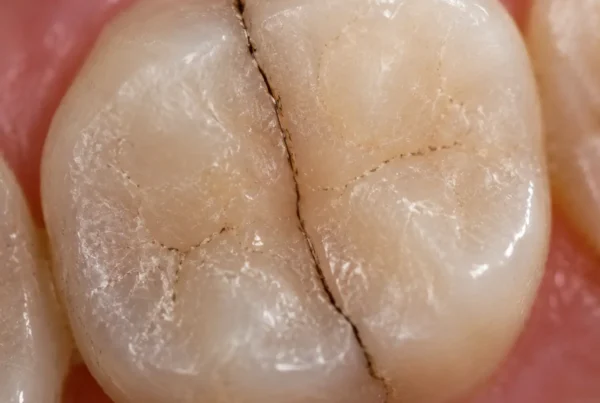
- A crack that has gradually progressed over time.
- A blow or dental trauma.
- A molar that has previously undergone root canal treatment and has become weaker.
Sometimes the patient thinks that only a small fragment has broken off, but when the tooth is examined, significant decay may be found underneath a filling or one of the walls of the molar may be fractured.

Is it urgent if the broken molar doesn’t hurt?
Not all dental fractures require the same degree of urgency, but it is not advisable to wait until pain appears before seeing a dentist.
When a molar loses part of its structure, the inner layers may become more exposed to bacteria, temperature changes, and further fractures.
In addition, a small break can become considerably larger if you continue chewing with that tooth.
Visiting an Emergency dentist in Palma de Mallorca promptly may allow for more conservative treatment and increase the chances of preserving as much of the natural tooth as possible.
What should I do if a piece of my molar has broken off?
If you have just noticed that part of a molar has broken off, there are a few precautions you can take until you are able to visit the dental clinic.
If you find the broken fragment, keep it. Although it cannot always be reattached, it may be useful for the dentist to examine it.
Rinse your mouth gently with water to remove any food debris and avoid chewing hard foods on that side of your mouth.
It is also advisable to avoid extremely cold, hot, or very sugary foods if you begin to notice sensitivity.
Do not try to glue the fragment back on using household glue or other products. These materials are not designed to be used inside the mouth and may make subsequent dental treatment more difficult.
Can a broken molar be saved?
In many cases, yes.
The treatment will mainly depend on how much tooth structure has been lost and how deep the fracture is.
A dentist in Palma de Mallorca will need to examine the tooth and, when necessary, take an X-ray to assess the condition of the tooth and its root.
Depending on the findings, different treatment options may be considered.
Composite restoration
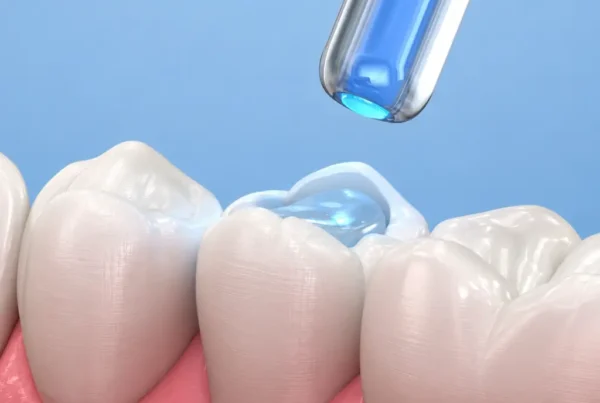
When the fracture is relatively small and enough healthy tooth structure remains, it may be possible to rebuild the missing area using composite resin.
This material makes it possible to restore the shape of the tooth and recover its function.
Dental inlay or onlay
When more tooth structure has been lost but enough healthy tissue remains, an inlay or onlay may be used in certain cases.
This type of restoration allows a larger part of the molar to be rebuilt.
Dental crown
If a significant part of the molar has become weakened, it may be necessary to protect it with a dental crown.
The crown covers the tooth and helps distribute the forces generated during chewing more effectively.
Root canal treatment
If the fracture has reached the dental pulp, where the nerves and blood vessels are located, root canal treatment may be necessary.
This can happen even if the molar does not initially hurt. In some cases, discomfort appears hours or days after the fracture occurs.
After root canal treatment, the tooth usually needs to be properly restored and, depending on how much structure has been lost, a crown may be recommended.
Extraction
Extraction is generally reserved for situations where the fracture extends too deeply, seriously affects the root, or so little tooth structure remains that a predictable restoration is no longer possible.
Whenever possible, the aim of treatment will be to preserve the natural tooth.
What happens if I leave a broken molar untreated?
A broken molar may remain painless for days, weeks, or even longer. However, this does not mean that the tooth is protected.
Over time, different problems may develop:
- Sensitivity to hot or cold temperatures.
- Pain when biting.
- Further fracture of the molar.
- Food becoming trapped in the area.
- Development or progression of tooth decay.
- Inflammation of the dental nerve.
- Dental infection.
- Swelling of the gum or face.
The more tooth structure that is lost, the more difficult it may become to rebuild the tooth later.
For this reason, having a fracture assessed while there is still no pain may allow the problem to be treated before it becomes a true dental emergency.
What if it is actually a filling that has broken?
Sometimes it may seem as though the molar itself has broken, when in fact part of an old filling has come loose.
It is also possible for the filling to come away together with a small piece of the tooth.
In both cases, it is important to have the tooth checked because new decay or a crack may be present underneath a damaged restoration.
The dentist will determine whether a new filling is sufficient or whether another type of restoration is required.
When should I see a dentist immediately?
Although any dental fracture should be assessed, there are certain symptoms that make it advisable to seek dental care as soon as possible:
- Severe or increasing pain.
- Bleeding from inside the tooth.
- Swelling of the gum or face.
- Pain when closing your mouth or chewing.
- Mobility of the tooth.
- A fracture caused by a significant blow or trauma.
- Pus or a bad taste in the mouth.
- Fever associated with dental swelling.
If there is also significant swelling that makes swallowing or breathing difficult, urgent medical attention is required.
I have broken a molar in Palma de Mallorca. What should I do?
If a piece of your molar has broken off, even if you are not experiencing any pain, it is advisable to have a professional check which part of the tooth has been affected.
In many cases, seeking treatment early makes it possible to use relatively simple treatments and preserve the tooth.
At Centro de Urgencias Dentales Mallorca, we can assess the fracture, determine its cause, and explain the different treatment options available to try to preserve the tooth whenever possible.
If you need an Emergency dentist in Palma de Mallorca, you can contact our clinic so that we can assess your case.
Do not necessarily wait for a broken molar to start hurting: the sooner the fracture is assessed, the greater the chances of preventing further damage and preserving the natural tooth.