

When there is an alteration in jaw development, specialized treatments in orthodontics in Palma de Mallorca such as the Herbst appliance can help correct bite problems caused by skeletal discrepancies. This device is mainly used to stimulate mandibular growth when the lower jaw is positioned too far back in relation to the upper jaw, promoting better oral function and improved facial harmony.
As a dentist in Palma de Mallorca, we frequently see young patients with a retruded lower jaw and an unbalanced bite. Detecting this issue early allows orthodontic treatments to take advantage of natural growth, achieving more predictable and stable long-term results.
What Is the Herbst Appliance?
In our practice dedicated to orthodontics in Palma de Mallorca, we use the Herbst appliance to treat certain cases of skeletal Class II malocclusion associated with a retruded lower jaw. This type of condition occurs when the mandible is positioned further back than normal in relation to the upper jaw, creating an incorrect relationship between the two structures.
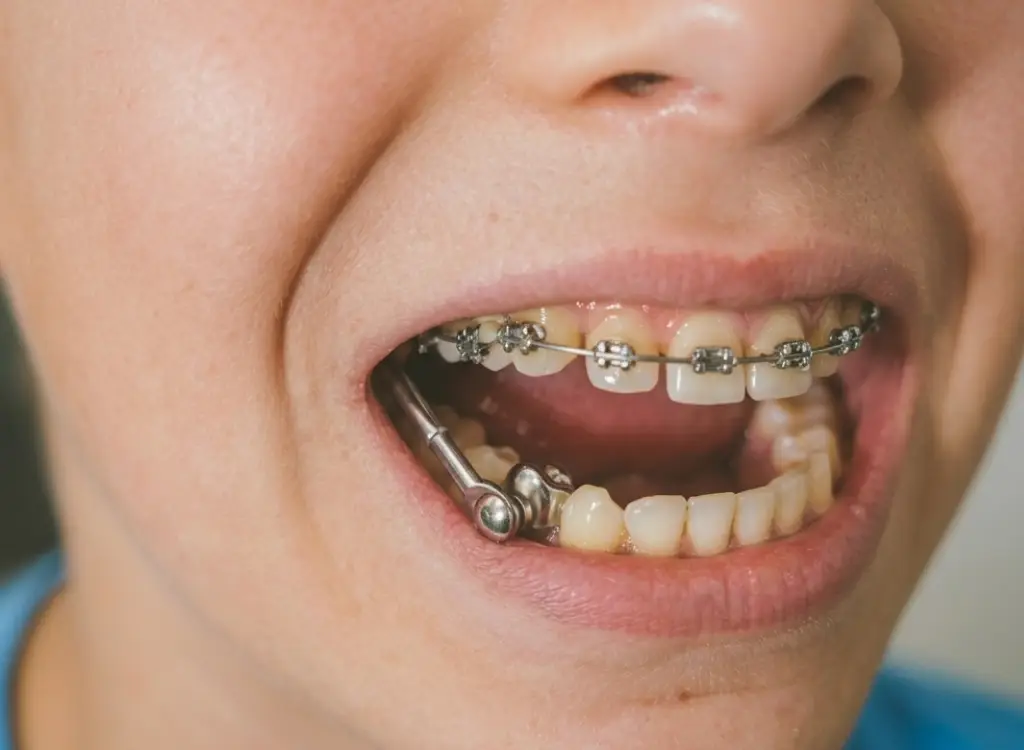
Unlike removable appliances that depend heavily on patient compliance, the Herbst appliance remains fixed in the mouth throughout the entire treatment. Through a system of telescopic arms or metal hinges located on both sides of the mouth, it keeps the lower jaw in a forward position at all times.
This forward positioning encourages a gradual adaptation of the bones, muscles, and surrounding structures during the growth phase. As a result, the relationship between the upper and lower jaws improves, helping to correct part of the skeletal discrepancy responsible for the malocclusion.
The primary objective of the Herbst appliance is not simply to straighten teeth but to address the underlying skeletal problem by promoting mandibular advancement.
What Is the Herbst Appliance Used For?

The main purpose of the Herbst appliance is to stimulate mandibular advancement in patients with a retruded or retrognathic lower jaw. By maintaining the jaw in a more forward position over an extended period, it encourages a more balanced development of the facial structures.
This treatment can provide both functional and aesthetic benefits. Functionally, it improves the bite and the relationship between the dental arches. Aesthetically, it can enhance the facial profile by reducing the appearance of a receding chin and improving overall facial balance.
By correcting the discrepancy between the jaws during growth, the Herbst appliance may also help reduce future complications related to occlusion, tooth wear, and certain functional disorders.
When Is the Herbst Appliance Recommended?
The Herbst appliance is particularly indicated for patients with skeletal Class II malocclusion caused by a retrognathic mandible. To achieve the best possible results, the patient should still have active growth potential.
Patients in Active Growth Stages
The ideal age for this treatment is usually between 9 and 14 years old. During this period, the jawbones are still developing, making it possible to take advantage of natural growth to achieve more significant skeletal corrections.
For this reason, regular dental check-ups during childhood and adolescence are essential for detecting jaw growth problems at an early stage.
Skeletal Class II Malocclusion
The most common indication involves patients whose lower jaw is positioned too far back relative to the upper jaw. This condition often presents with excessive overbite, prominent upper teeth, or a facial profile characterized by a weak chin.
Before starting treatment, a complete orthodontic assessment is necessary to evaluate the severity of the skeletal discrepancy and determine whether the Herbst appliance is the most appropriate option.
Cases Where Orthognathic Surgery May Be Avoided
In certain young patients, early correction of a significant jaw discrepancy may reduce the need for more invasive surgical treatments later in life.
Although the Herbst appliance can also be used in young adults, its ability to influence jaw growth decreases considerably once skeletal development is complete. For this reason, the most effective results are generally achieved during adolescence.
Combination with Other Orthodontic Treatments
The Herbst appliance is often part of a broader orthodontic treatment plan. In many cases, it is combined with braces or other orthodontic systems to simultaneously correct jaw position and dental alignment.
In our clinic specialized in orthodontics in Palma de Mallorca, the Herbst appliance frequently forms part of comprehensive treatments that also include braces or other orthodontic techniques. This combination allows us to correct both skeletal and dental problems, achieving more complete and stable long-term results.
How Long Does It Take to Adapt to the Herbst Appliance?
During the first few days after placement, it is common to experience a feeling of pressure or tension in the jaw. Some patients may also notice mild difficulties when speaking or chewing while adapting to the new jaw position.
These discomforts are generally temporary and gradually disappear as the muscles and jaw joints adapt to the appliance.
Regular follow-up appointments allow us to ensure that all components remain in good condition and that treatment is progressing as planned.
Oral Hygiene with a Herbst Appliance
Maintaining excellent oral hygiene is essential throughout treatment. The presence of bands, attachments, and metal joints can increase the accumulation of plaque and food debris, making daily cleaning especially important.
Careful Tooth Brushing
A thorough brushing routine at least three times a day is recommended using a soft-bristled toothbrush. Special attention should be paid to the areas where the appliance is attached to the teeth and around the side hinges.
Gentle and precise brushing movements help remove plaque while preventing irritation of the gums and damage to the appliance.
Interdental Brushes
Interdental brushes are particularly useful for cleaning narrow spaces that cannot be reached effectively with a conventional toothbrush.
They help remove food particles trapped around the bands and beneath certain components of the appliance, contributing to better overall oral hygiene.
Choosing the correct size is important to avoid damaging the gums or causing unnecessary irritation.
Oral Irrigator
An oral irrigator can be an excellent complement to daily cleaning during Herbst treatment. A pressurized stream of water helps remove food debris from hard-to-reach areas around the appliance.
Its use is especially beneficial for patients who struggle to maintain adequate hygiene around the metal components.
However, it should always be considered a supplement to brushing rather than a replacement.
Mouthwash and Prevention of Oral Problems
Daily use of fluoride mouthwash can help strengthen enamel and reduce the risk of tooth decay. In some cases, the orthodontist may recommend temporary use of chlorhexidine-based products to control gum inflammation.
The most suitable mouthwash should always be selected according to professional recommendations, as every patient has different needs.
What Happens If Oral Hygiene Is Poor?
Insufficient cleaning may increase the risk of cavities, tartar accumulation, gum inflammation, and even permanent enamel decalcification.
For this reason, maintaining a strict oral hygiene routine is just as important as the orthodontic treatment itself.
Foods to Avoid During Treatment
Certain foods can increase the risk of damaging or loosening components of the Herbst appliance.
Patients are generally advised to avoid chewing gum, sticky candies, very hard nuts, ice, and foods that require excessive biting force.
It is also recommended to cut certain foods into smaller pieces to reduce mechanical stress on the appliance and minimize the risk of breakages.
Benefits of the Herbst Appliance
The main benefits of this treatment include correction of jaw position, improvement of chewing function, and optimization of the relationship between the upper and lower jaws.
Another important advantage is the improvement in facial profile that can be achieved in patients with a retruded mandible. By encouraging a more forward jaw position, the overall appearance of the face may become more balanced and harmonious.
In addition, because the appliance is fixed, treatment effectiveness does not depend on the patient remembering to wear it for a specific number of hours each day, reducing problems related to poor compliance.
As a dentist in Palma de Mallorca, we recommend regular follow-up visits to monitor treatment progress, supervise oral hygiene, and identify any issues before they affect the final outcome.
How Much Does the Herbst Appliance Cost?
The cost of a Herbst appliance varies depending on several factors. In most cases, it is included as part of a comprehensive orthodontic treatment plan rather than being priced separately.
The complexity of the malocclusion, the estimated duration of treatment, the need to combine it with braces, and the individual characteristics of each patient can all influence the final cost.
For this reason, the most accurate way to determine the price is through a personalized orthodontic assessment that allows a treatment plan to be tailored to each patient’s specific needs.