
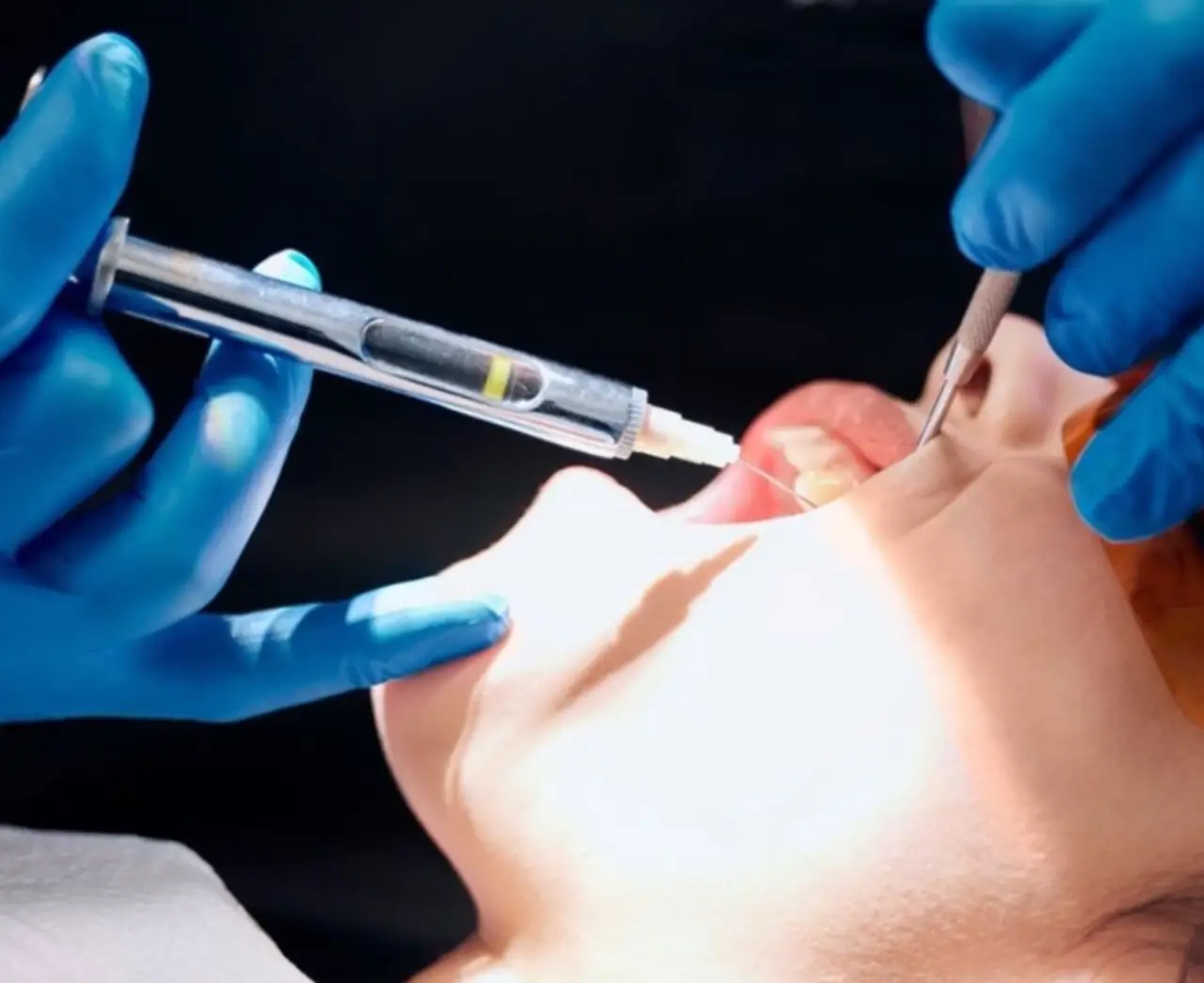

After a dental treatment, many patients at a dental clinic in Palma de Mallorca wonder how long the numbness will last and whether there is anything they can do to make it wear off sooner. Although dental anesthesia mainly fades with time, there are some safe guidelines that can help speed up the process and prevent unnecessary discomfort.
In our experience as a dentist in Palma de Mallorca, addressing these types of questions is essential so that patients feel reassured after their visit and know how to act correctly at home.
How long does dental anesthesia usually last?
The duration of anesthesia depends on the type of anesthetic used and the technique applied by the professional. In general, simple local anesthesia usually lasts between one and three hours. When an anesthetic with a vasoconstrictor, such as adrenaline, is used, the effect may last up to four or even six hours.
It is normal for numbness in the lips and tongue to be noticeable for longer, as these are particularly sensitive areas. If after six to eight hours you do not notice a gradual improvement, it is advisable to contact your dental clinic for an assessment.
Safe tips to help the anesthesia wear off sooner
Although anesthesia cannot be eliminated immediately, it is possible to help the body metabolize it faster by gently and carefully stimulating blood circulation.
Doing light physical activity, such as taking a calm walk or moving around the house a little, helps activate circulation and makes it easier for the anesthetic to wear off. It is also helpful to gently massage the outside of the cheek, chin, or lips with a clean hand, always without pressing directly on the treated area.
In some cases, and only if the dentist has not advised against it, you can slowly chew soft and easy-to-eat foods, such as yogurt, ripe fruit, or even ice cream, always on the side opposite the numb area. In addition, applying a warm (never hot) compress to the cheek for ten to fifteen minutes can help dilate blood vessels and speed up the elimination of the drug.
Finally, staying well hydrated by drinking water supports the body’s natural processes and helps the anesthesia wear off sooner.

Medical options to reduce duration
There are specific medical options that can shorten the duration of some local anesthetics. One example is phentolamine, a medication that can reduce numbness, but it should only be prescribed and administered by a dentist in specific cases.
Self-medicating to try to “reverse” the anesthesia is not recommended, as doing so without professional supervision increases the risk of side effects and unnecessary complications.
Things to avoid while the anesthesia lasts
While the area is still numb, it is essential not to bite it or touch it to check whether the anesthesia has worn off, as it is easy to injure the lips, cheeks, or tongue without realizing it.
You should also avoid very hot or very cold foods, as they can cause burns or injuries when temperature sensation is reduced. Likewise, it is advisable not to consume alcohol or other substances without medical advice, as they may interfere with the metabolism of the anesthetic or with other prescribed medications.
If you have had a filling, an extraction, an implant, or another procedure and have doubts about whether the duration of the anesthesia is normal, do not hesitate to consult your dentist in Palma de Mallorca. Professional advice is always the best way to take care of your oral health.